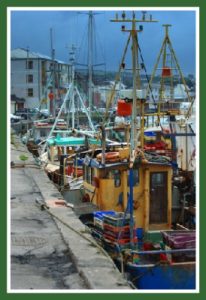
Fishing plays a vital role in the cultural and economic fabric of the Gulf of Maine region, with the identity and current-day economy of many of its coastal communities deeply tied to fishing and to iconic species such as cod and lobster. As one of the oldest European settlement areas in North America, the Gulf of Maine’s fisheries have been historically important. The cod fisheries helped feed Europe’s industrial revolution and were an important part of the 17th through early 19th Century’s trade routes between Africa, the Caribbean, North America and Europe.
Over the past 20 years there has been reduced commercial fishing in this region due to stock depletion cause by a variety of factors, including over-fishing, migration, climate change, and water pollution. Groundfish stocks in the Gulf of Maine have become severely depleted and there is a greater reliance on the harvesting of lobster and other invertebrates. As a result, traditional maritime-oriented ways of life are in decline, changing the face and structure of many coastal communities.
Aquaculture as a form has been practiced in the Gulf of Maine region for over a century, including both finfish and shellfish culture. Marine aquaculture as an industry however, is relatively new and dates to the early 1970s. New Brunswick is the largest producer of aquaculture products, followed by Maine, Nova Scotia and Massachusetts. Aquaculture species include Atlantic salmon, oysters, clams, mussels, and more recently the culture of Atlantic halibut, Atlantic cod, Atlantic and shortnose sturgeon, bay scallop, the giant scallop, and kelp have been investigated.
Fisheries and Aquaculture Theme Papers
Two theme papers have been identified that will be developed for the State of the Gulf of Maine Report:
- Aquaculture in the Gulf of Maine
- Commercial Fisheries (PDF, 2.3 mb)
Actions and Responses
In addition to the Actions and Responses described in each theme paper, many different organizations have developed guidelines, codes of conduct, best management practices, or other types of advice aimed at addressing the issues described in the theme papers. Some of the guidelines related to Fisheries and Aquaculture can be found here. These links are maintained by outside agencies and are provided for information purposes. The linked documents are not endorsed by the Gulf of Maine Council on the Marine Environment.
The State of the Gulf of Maine Report was coordinated and funded by:

Additional funding and in-kind support was provided by:





Quick Links
Actions and Responses
Each State of the Gulf theme paper has an “Actions and Responses” section that briefly discusses how the issues highlighted in the paper are being addressed. This section doesn’t list every possible action that is or could be taken. Many other documents—such as guidelines, best management practices, and codes of conduct—have been developed for carrying out activities. Some of these guidelines can be found here.
These links are provided for information purposes and are not endorsed by the Gulf of Maine Council. The linked documents may recommend techniques that do not meet the requirements of Gulf of Maine Council member agencies. They may also contravene regulations in readers’ jurisdictions. Before undertaking activities, readers should check laws, regulations and guidelines in their home jurisdiction. The supporting agencies do not make any warranty or representation, expressed or implied, with respect to the accuracy or completeness of the information.
We hope the State of the Gulf reports provide useful information for your endeavours in the Gulf of Maine, and we look forward to your feedback.