For best performance and viewing, please update your browser to Netscape 7.0, or IE 5.0 or greater.


Promoting cooperation to maintain and
enhance environmental quality
News
 

Journal article reports on the diffusion and impact of Gulf of Maine Council publications March 28, 2008
Researchers at Dalhousie University conducted a detailed study of the impact of the Gulf of Maine Council's publications since 1989 based on citations and other measures. Among the findings of the study, which were reported in Publishing Research Quarterly, were the following: (1) The Council has significant publication initiatives and has produced more than 300 titles, most of which are grey literature. (2) The Council has not consistently followed effective practices for information dissemination. (3) Continuing development of the Council's website could help overcome the dissemination problem. In contrast, a United Nations agency also studied by the researchers has not devoted sufficient resources to its website, impairing its ability to disseminate information. (4) Some evidence was found that Council publications are used in public-policy settings, but citation analysis has limitations for tracking usage of information in public policy and management. Other methods of determining usage in policy decision-making contexts are needed. Download the article (PDF, 337 KB): MacDonald, B.H., R.E. Cordes, and P.G. Wells. 2007. Assessing the Diffusion and Impact of Grey Literature Published by International Intergovernmental Scientific Groups: The Case of the Gulf of Maine Council on the Marine Environment. Publishing Research Quarterly 23:30–46.

Council announces new publication on salt marsh ecology, monitoring, and restoration February 26, 2008
Salt marshes remove pollution from the water, provide food and shelter for fish and birds, protect the shoreline from erosion, and perform other valuable roles in the ecosystem. However, a large percentage of the Gulf of Maine's salt marshes have been lost, and many remaining marshes are in poor health. Individuals and organizations around the region are working to restore salt marshes and monitor their health. To help facilitate these efforts, the Gulf of Maine Council on the Marine Environment is publishing a 42-page booklet called Salt Marshes in the Gulf of Maine: Human Impacts, Habitat Restoration, and Long-term Change Analysis. Beautifully illustrated with color photographs and illustrations, the booklet is intended as a useful tool for resource managers, lawmakers, non-governmental organizations, educators, and others interested in understanding salt marshes as a key element of the Gulf of Maine ecosystem. To download the booklet as a PDF file, request a hard copy, or download selected illustrations as jpeg files, go to www.gulfofmaine.org/saltmarsh.


Media room Press releases, information, and links for journalists.

News > Archives
 

Stream Barrier Removal Monitoring Guide

Council releases report on habitat classification in the Gulf of Maine December 20, 2007
The Gulf of Maine Council on the Marine Environment announces publication of Habitat Classification in the Gulf of Maine: A Review of Schemes and a Discussion of Related Regional Issues. The 15-page report provides background information on marine habitat classification and current research to develop classification schemes in the region. The report is intended to support discussions among managers and scientists for whom habitat classification is a valuable tool. The report was produced by the Habitat Conservation Subcommittee of the Gulf of Maine Council on the Marine Environment. For more information and to download the report, visit www.gulfofmaine.org/habitatclassification.


Stream Barrier Removal Monitoring Guide

Council publishes Stream Barrier Removal Monitoring Guide December 18, 2007
The Gulf of Maine Council on the Marine Environment announces publication of the Stream Barrier Removal Monitoring Guide. Developed collaboratively by more than 70 scientists, natural resource managers, engineers and consultants from government agencies and non-governmental organizations, the guide presents a standardized framework for monitoring the ecological changes that occur when dams, culverts, and other stream barriers are removed. Across the Gulf of Maine watershed, agencies, non-governmental organizations, and private parties are removing dams and replacing culverts to restore stream processes and fish passage. Significant resources are invested in these stream barrier removal projects, but monitoring the outcomes of the projects has not been a priority. Monitoring is essential to document the effectiveness of restoration projects; document the long-term regional impacts of restoration efforts; improve restoration techniques; and communicate the results of restoration projects to stakeholders and the public. The Gulf of Maine Council on the Marine Environment addressed the need for consistent stream barrier removal monitoring by developing the Stream Barrier Removal Monitoring Guide. The Guide provides a framework of critical monitoring parameters for use at dam and culvert removal sites in the Gulf of Maine watershed.  The framework can easily be adapted for stream barrier removal projects in other regions. For more information and to download the Guide, visit www.gulfofmaine.org/streambarrierremoval.

Government of Canada announces new funding for Gulf of Maine Council on the Marine Environment November 8, 2007
The Honourable Greg Thompson, Minister of Veterans Affairs, on behalf of the Honourable John Baird, Minister of the Environment, today announced $751,000 of new funding for four initiatives of the Gulf of Maine Council on the Marine Environment as part of Canada’s Action Plan For Clean Water. This announcement is a component of the Government of Canada’s total investment of $61.5 million over 5 years to improve the health of our oceans. “Today’s announcement is further proof of our Government’s commitment to protecting and preserving our environment,” said Minister Thompson. “Maritimers understand the need to ensure Canada’s marine resources are protected and our Government is taking real action to make it happen.  Today’s investment in the Gulf of Maine area will ensure a balanced approach between ongoing economic prosperity and the health of our oceans.” Today’s announcement will contribute to four initiatives of a joint Canada/USA 5-year action plan of the Gulf of Maine Council on the Marine Environment:

  • The Climate Change Network which is working on increasing awareness of projections of how climate change will affect the region and on developing strategies for adapting to the changes.
  • Gulfwatch is a special program for the joint monitoring for toxic chemicals in the transboundary ocean waters
  • Ecosystem Indicators Partnership which is developing a new Internet-based reporting system for information about the Gulf of Maine’s environment.
  • Public Education Products which are developed and delivered by the Council’s outreach committee.   

Download news release (PDF, 97 KB)

Council awards $99,779 in grants to protect the Gulf of Maine October 3, 2007
The Gulf of Maine Council on the Marine Environment announced $99,779 in grant awards to organizations working to protect the Gulf of Maine and its watershed. Projects awarded funding include an evaluation of lobster hatchery effectiveness in Maine, support for “No Discharge Area” designation for Cape Cod Bay, and protection of rare horse mussel reefs in the Bay of Fundy. In both Canada and the United States, citizen groups, community organizations, and volunteers play an important role in ensuring the health and vitality of the Gulf of Maine watershed. Recognizing the crucial role played by these organizations, the Gulf of Maine Council awards funding to projects that further the goals of the Council’s five-year Action Plan. Annually, the Council invites eligible organizations to apply for funding available through a U.S. Congressional appropriation administered by the National Oceanic and Atmospheric Administration (NOAA).
Recipients of the 2007-2008 Action Plan grants

ESIP releases version 2.0 of interactive map of monitoring sites August 6, 2007
The long-term goal of the Ecosystem Indicator Partership (ESIP) is to provide Web-based access to synthesized monitoring data collected in the Gulf of Maine and its watershed. Numerous government agencies and non-government organizations conduct monitoring programs in the region. As a step toward the long-term goal, the ESIP Monitoring Map provides information about where some monitoring programs collect data in the Gulf of Maine. Version 1.0 of the ESIP Monitoring Map was developed with funding from the Cooperative Institute for Coastal and Estuarine Environmental Technology (CICEET) and released in October 2006. For version 2.0, ESIP Program Manager Christine Tilburg worked with the Council's information technology contractors, Jim Cradock (Yellahoose LLC) and Peter Taylor (Waterview Consulting), to add new features and refine the functionaliy of version 1.0 based on user feedback. Among the new features is an easy way to download a printable PDF version of any map that is created on the Web page. For example, a user interested in coastal contaminants can create a custom map of watershed boundaries and contaminants-monitoring sites, and then click Create PDF of Map to download a copy of the map that can be included in a report or emailed to colleagues. Although monitoring data in the ESIP Monitoring Map can be accessed by following data links back to the parent organization, the purpose of this map is not to provide monitoring data. Instead, this map provides a means of assessing the type of monitoring data that is available in the Gulf of Maine. Data from these programs will be made available in a new ESIP Indicator Map, under development now.

ESIP Monitoring Map
map map map map
map map
map map map map


New issue of Gulf of Maine Mapping Initiative (GOMMI) newsletter released July 10, 2007
The Gulf of Maine Mapping Initiative (GOMMI) has released the summer 2007 issue of its newsletter. This issue provides news of seafloor mapping in Cape Cod Bay, Bay of Fundy, Boston Harbor and other areas in the Gulf of Maine. Download the GOMMI newsletter: PDF version (84 KB) or Word version (89 KB)

Council invites marine industry to consultation meetings August 1, 2007
The Gulf of Maine Council on the Marine Environment invites people engaged in all sectors of marine industry including fisheries (commercial and recreational), transport, energy, tourism, and NGOs to participate in consultation meetings in New England and the Bay of Fundy region in August and September 2007. The purpose of the meetings is to discuss ways to make the Council more relevant to marine industry. The agenda will include a presentation on the Council’s programs and accomplishments. Venues:

  • Yarmouth, NS: August 28 at the Grand Hotel
  • St. Andrews, NB: August 30 at the St. Andrews Biological Station
  • Rye, NH: September 13 at the Seacoast Science Center

All meetings are scheduled for 10:00 a.m. to 2:00 p.m., and a light lunch will be provided. Click here for more information about the meetings. If you would like to attend a Canadian meeting, contact Don Aldous at 902.456.3512 or don.aldous@gmail.com. If you would like to attend the U.S. meeting, contact Jennie Harrington at 978.768.3880 or jennie.harrington@mragamericas.com. Following the meetings, a moderated Web forum will facilitate dialogue among industry members.

Presentations from joint meeting of ESIP and the Climate Change Network July 10, 2007
The Ecosystem Indicator Partnership (ESIP) and Climate Change Network held a joint meeting on June 11, 2007, in New Brunswick. Two presentations from the meeting and a summary of the ESIP portion of the meeting are available now on the ESIP Web page.

Regional Habitat Monitoring Data System

Gulf of Maine Council announces Regional Habitat Monitoring Data System March 15, 2007
The Gulf of Maine Council on the Marine Environment announces a new Web-based Regional Habitat Monitoring Data System (RHMDS). In partnership with the Gulf of Maine Ocean Observing System (GoMOOS), University of New Hampshire, Massachusetts Office of Coastal Zone Management, U.S. Geological Survey, and Maine Department of Marine Resources, the Council has developed a Web-based system that enables sharing, integration, and use of coastal habitat monitoring data. This online system, available at www.gomoos.org/gomc/map, provides a user-friendly, standardized data entry mechanism that allows integration of coastal monitoring datasets from around the Gulf of Maine. The site enables monitoring programs to safely store their data, while facilitating simultaneous use of information from multiple sources. The data can be displayed in maps, graphs, and reports to paint a clear picture of habitat conditions and trends regionally and at individual sites. For example, managers can see region-scale patterns of vegetation in salt marshes, as well as how salt marsh vegetation changes over time after habitat restoration activities. By integrating data from around the Gulf of Maine, this new tool will make possible more effective and timely coastal habitat management. As a proof of concept, this system has been developed initially with data from a limited number of monitoring sites in salt marshes and seagrass beds. Ultimately the RHMDS will include other coastal habitat data to serve multiple partners around the Gulf of Maine and enhance understanding of coastal ecosystems.

GOMMI

Gulf of Maine Mapping Initiative (GOMMI) adds new overview to Web page
April 9, 2007
A new PowerPoint presentation about seafloor mapping and the Gulf of Maine Mapping Initiative has been added to the GOMMI Web page. It can be downloaded from the following link.
General presentation about seafloor mapping and GOMMI (PowerPoint, 4.79 MB)

Invitation to Climate Change Network workshop on June 11 May 11, 2007
On June 11, 2007, the Climate Change Network is co-hosting a one-day workshop on possible impacts of climate change on ecosystems in the Gulf of Maine region and implications for indicators and monitoring. Attendance is free and open to the interested individuals throughout the Gulf of Maine region. The workshop is fast approaching and spots are filling up. Don’t miss out on this fantastic opportunity! Hosted by the Gulf of Maine Council on the Marine Environment’s Climate Change Network and Environment Canada, this event is set to take place on June 11th, 2007, in St. Andrews, New Brunswick at the beautiful Fairmont Algonquin Hotel situated on the shore of the Passamaquoddy Bay. Following registration and a beautiful breakfast buffet, there will be presentations on the Climate Change Network goals and a review by keynote speakers on recent reports from the International Panel on Climate Change (IPCC). The afternoon will consist of a meeting for ESIP members with breakout activities and discussions on how climate change projections and the use of indicators affect current and future research on ecosystem health and sustainability. For people not in the ESIP group, we have other activities lined up, including speaker presentations that are sure to be informative. Finish off the day after supper at the evening networking event highlighted by a talk on recent studies of sea-level rise in the Gulf of St. Lawrence and their implications for the Gulf of Maine region. Register by emailing Gary Lines at gary.lines@ec.gc.ca or faxing your information to 902.426.2248. Please include your name, affiliation, email address, phone number, fax number, address, and any special requests in terms of food (i.e., vegetarian). To book your room, call the Fairmont Algonquin at (506) 529-8823 by Friday, May 11, to guarantee your space and preferential group rate. Registrants will receive a more detailed event package later in May. Following the Climate Change Network Inaugural event, the Gulf of Maine Council will hold its meeting, award ceremony and ESIP working group sessions on June 12 to 14 at the Fairmont Algonquin, St. Andrews, New Brunswick. We look forward to your participation, and we assure you of an outstanding agenda that promises to be interesting and beneficial for all.

Action Plan cover
Gulf of Maine Council releases Action Plan 2007-2012 February 1, 2007
The Gulf of Maine Council on the Marine Environment Action Plan 2007-2012 describes the goals, outcomes, and activities that the Council will pursue through its committees and partnerships in the next five years. The Action Plan was developed by incorporating public input and the findings of numerous studies, workshops, and key policy developments, including Canada’s Oceans Action Plan and the U.S. Ocean Action Plan. “For nearly twenty years the Gulf of Maine Council has enabled the region’s governments to be more effective stewards of the marine environment by supporting transboundary dialogue and helping to focus efforts on those issues requiring a regional response,” said Governor John E. Baldacci of Maine.
Action Plan Web page
Action Plan 2007-2012 (PDF, 1.8 MB)
News release about the Action Plan (Word, 45 KB)

American eel booklet cover
Booklet provides overview of American eel's plight and methods for restoration
February 7, 2007
The Gulf of Maine Council on the Marine Environment has released a twelve-page booklet describing the challenges and methods for restoration of American eels in the Gulf of Maine region. The booklet, American Eels: Restoring a Vanishing Resource in the Gulf of Maine, was produced by the Council's Habitat Restoration Subcommittee and the Gulf of Maine Science Translation Project with support from The Nature Conservancy, Maine Sea Grant, and Maine Coastal Program. The American eel presents challenges to conservation because its range spans political boundaries and habitats traditionally managed by different agencies. In 2004, the Atlantic States Marine Fisheries Commission (ASMFC) recommended that the United States Fish and Wildlife Service (USFWS) and National Marine Fisheries Service consider protecting the Atlantic coastal stock of American eels.
High-resolution version (PDF, 2.93 MB) for printing.
Low-resolution version (PDF, 929 KB) for viewing on screen.
Hard copies of the booklet are available. To request hard copies, email your name, mailing address, and number of copies desired to Lorraine Lessard with "Request for eel booklet" as the subject line of your email.

Council seeks nominations for visionary and volunteer awards February 1, 2007
Do you know a group or individual who has worked professionally or volunteered selflessly to improve the Gulf of Maine? Do you know a volunteer who has devoted his or her life to natural resource and environmental issues in the Gulf? The Gulf of Maine Council on the Marine Environment is calling for nominations for its annual Gulf of Maine Visionary and Longard Volunteer Awards. One person will be selected to receive the Longard Award honoring lifetime achievement by a volunteer. One group and one individual in each province and state bordering the Gulf of Maine will be selected to receive a Visionary Award, which recognizes innovation, creativity, and commitment to protecting the marine environment. Paid professionals or volunteers from Massachusetts, New Hampshire, Maine, New Brunswick, and Nova Scotia are eligible for the Visionary Awards. Nomination forms must be received by April 1, 2007. Click here for a list of previous award recipients.
Gulf of Maine Visionary Award: Nomination form (Word, 55 KB).
Longard Volunteer Award: Nomination form (Word, 237 KB).

Ecosystem Indicator Partnership (ESIP) releases new interactive map October 21, 2006
The Ecosystem Indicator Partnership (ESIP) was formed as a committee of the Gulf of Maine Council to provide Web-based access to synthesized ecological monitoring data collected in the Gulf of Maine and its watershed. The data will be used to generate ecosystem indicators for a state-of-the-environment reporting system. As an initial step toward this goal, ESIP is releasing an interactive map showing where different types of monitoring are conducted in the region by government agencies and non-government organizations. The purpose of the new ESIP Monitoring Map is to provide a spatial framework that informs the selection of priority ecosystem indicators. While this pilot version contains only limited information, ESIP will continually expand map coverage to other monitoring programs and provide more details about specific monitoring measures at each location. Data displayed on the ESIP Monitoring Map can be downloaded in database files or accessed via Web Mapping Services (click here for more information). Funding to develop the pilot version of the ESIP Monitoring Map was provided by the Cooperative Institute for Coastal and Estuarine Environmental Technology (CICEET).

Natural Resources Council of Maine releases report on projected impacts of sea-level rise September 19, 2006
The Natural Resources Council of Maine (NRCM) released what it calls one of the most complete depictions ever done of the potential impacts on Maine’s coastline from rising sea levels due to global warming. Using the latest available science, NRCM’s analysis shows that coastal businesses, homes, wildlife habitat, transportation systems, and some of the state’s most treasured places are highly vulnerable to sea-level rise. NRCM identified 20 “Most at Risk” communities along Maine’s entire coastline—from York and Kennebunkport to Jonesport and Beals—where rising sea level could result in the loss of up to 30 percent of a town’s land and cause millions of dollars worth of damage to property and infrastructure. The NRCM analysis estimates that a one-meter rise would submerge more than 20,000 acres of coastal real estate in Maine; a six-meter rise would inundate more than 128,000 acres. The two scenarios would destroy 53 and 380 miles of roads, respectively. For more information, visit http://www.maineenvironment.org/sea_level_rise.asp.

Proposals for habitat restoration grants now being accepted online at Habitat Restoration Web Portal October 21, 2006
Proposals for the Gulf of Maine Council-NOAA Habitat Restoration Grants Program are due no later than November 17, 2006. This year, all proposals must be submitted by using the Web-based grant proposal forms available on the Gulf of Maine Habitat Restoration Web Portal. No hard copies or emailed proposals will be accepted. The purpose of the grants program is to support a strategic approach to marine, coastal, and riverine habitat restoration within the Gulf of Maine and its watershed. The Council requests proposals for projects that will address habitat restoration including but not limited to the following: diadromous fish restoration and stewardship; coastal wetland restoration and stewardship; riverine restoration and stewardship; and restoration of other habitat types including submerged aquatic vegetation, shellfish beds, and other subtidal and intertidal habitats. For more information, read the Request for Proposals (RFP) for Habitat Restoration Grants Program Year Six (2006-2007): Web page (HTML) or Word (154 KB) or PDF (274 KB).

Symposium on "The Evolution of Ecosystem Based Management: From Theory to Practice" to be held October 19-20 September 22, 2006
A symposium on "The Evolution of Ecosystem Based Management: From Theory to Practice" will be held October 19-20, 2006, in Bristol, Rhode Island. From fishers to coastal managers, government and industry leaders to environmental advocates, many people believe the solution to more effective management of coastal and marine resources is to move from fragmented management to management based on the coastal and marine ecosystem. The big question now is how to get from the theory of ecosystem-based management to putting it into practice. Join leading practitioners, policy-makers, researchers, and scholars to discuss the problems and lessons learned related to coastal and ocean management and the shift toward ecosystem-based management. The symposium is sponsored in part by Roger Williams University Ralph R. Papitto School of Law, Rhode Island Sea Grant College Program, and University of Rhode Island Department of Marine Affairs. For more information, visit http://law.rwu.edu/sites/marineaffairs/symposia/sixthMLS.aspx.

Editorial in Science focuses on offshore aquaculture legislation September 11, 2006
This week's issue of Science features an editorial by Rosamond Naylor on offshore aquaculture legislation. Full text of editorial

Marine Policy journal article on collaborative fisheries management in northeastern U.S. September 11, 2006
The November 2006 issue of Marine Policy contains an article by Patricia Pinto da Silva and Andrew Kitts on "Collaborative fisheries management in the Northeast US: Emerging initiatives and future directions".
Abstract: The nature of participation by fishing organizations in fisheries management in the Northeast US is changing. Evidence of this is the number of groups that are actively seeking opportunities for group governance of marine resources. This article explores emerging collaborative or co-management arrangements in this region (a process whereby decision-making is shared between federal/council level and fishery stakeholder groups) and the shift towards an ecosystem-based approach to the management of marine fisheries. This research suggests that it is an opportune time for the development of a regional policy in the Northeast that provides an enabling environment in support of decentralized governance of federally managed marine fisheries. It also suggests that these initiatives can play a key role in operationalizing ecosystem-based management.

Survey: Provide your input for the Council's 2006-2011 Action Plan May 1, 2006
The Council welcomes your thoughts on priorities that it should address over the next five years. Click on the following link to take a brief survey: http://www.surveymonkey.com/s.asp?u=832102057531. Results of the survey will help to shape the Council’s 2006-2011 Action Plan, which will guide its policy and funding initiatives. If you have any questions about the survey or the Action Plan, please contact Michele Tremblay, Council Coordinator, at mlt@naturesource.net or (603) 796-2615.

Updated map of multibeam sonar surveys in the Gulf of Maine February 20, 2006
The Gulf of Maine Mapping Initiative (GOMMI) is a U.S.-Canadian partnership of government and nongovernment organizations to conduct comprehensive seafloor imaging, mapping, and biological and geological surveys. GOMMI recently released a new interactive map showing areas in the Gulf of Maine that have been covered by multibeam sonar surveys.

Presentations from ecosystem-based management conference available online March 22, 2006
COMPASS hosted a two-day meeting called “Implementing Marine Ecosystem-Based Management: Integrating Perspectives from Science and Management” in Monterey, California, on December 12–13, 2005. The meeting facilitated discussions among scientists and managers about the challenges and opportunities for implementation of ecosystem-based management (EBM). Participants included scientists and managers from state and federal agencies, academic institutions, non-government organizations, foundations, and other stakeholders. Among the presenters was Gulf of Maine Councilor Susan Snow-Cotter, director of the Massachusetts Office of Coastal Zone Management. She spoke about "Effective Engagement of Stakeholders: The Massachusetts Experience" (download PDF). The meeting agenda and many of the presentations are now available on the COMPASS Web site.

Council releases publication on long-term monitoring of salt marshes September 23, 2005
The Gulf of Maine Council's Habitat Monitoring Subcommittee and its partners have developed standard methods for regional salt marsh monitoring that offer the potential for a cohesive, comprehensive view of salt marsh conditions. Adoption of these standards by existing monitoring programs around the Gulf of Maine could provide the basis for an extensive regional monitoring network. As part of this effort, the Subcommittee released Salt marshes of the Gulf of Maine: Long-term monitoring to assess human impacts and ecological condition. This four-page publication provides an overview of the value of salt marshes for fish and other animals, the need for enhanced monitoring of these habitats, and the initiative to build a regional monitoring network. For more information and to download the publication, go to http://www.gulfofmaine.org/habitatmonitoring.

Deadline approaching for Knauss Marine Policy Fellowship Program January 16, 2006
The John A. Knauss Marine Policy Fellowship Program, which is sponsored by the National Oceanic and Atmospheric Administration's (NOAA) National Sea Grant College Program, matches highly qualified graduate students with hosts in the legislative and executive branches of government in the Washington, D.C., area for a one-year paid fellowship. Interested students should discuss this fellowship with their local Sea Grant Program Director. Applications must be submitted with signature to the local Sea Grant program by the deadline set in the announcement (usually early to mid-March). Click here for more information.

Workshop on nearshore marine monitoring to be held February 7-9, 2006 January 16, 2006
A workshop on nearshore marine monitoring is scheduled for February 7-9, 2006, at the Bedford Institute of Oceanography in Dartmouth, Nova Scotia. It will focus on sharing approaches to monitoring of nearshore marine/estuarine environments from the coastal zones of Canada; identifying needs for nearshore marine/monitoring data; and discussing how nearshore marine/ estuarine monitoring in Canada could be better coordinated. For information, visit
http://www.eman-rese.ca/eman/reports/meetings/marine2006/intro.html.

Ecosystem-based governance conference on January 13 January 3, 2006
A conference entitled Ecosystem Management in New England: An Assessment of Ecosystem Governance Structures will be held at the Roger Williams University School of Law in Bristol, Rhode Island. The conference date is January 13, 2006, from 9:00 am – 4:00 pm. Regional experts including practitioners and researchers will discuss the feasibility of regional ocean governance for New England, including its challenges and potential. Panelists will represent existing ocean and coastal governance structures in New England and issues that have consistently been addressed state by state rather than regionally. The goal of the seminar is to discuss the effectiveness of current structures in advancing ecosystem-based management for the region and whether regional ocean governance will contribute to more effective management in the northeast. Ideas from this workshop will be presented to authorities in New England to inform the existing Regional Ocean Council discussion and for further discussions on a national scale at the 6th Marine Law Symposium in October 2006 entitled The Evolution of Ecosystem Based Management: From Theory to Practice. The agenda and the registration form for the January 13 meeting are available at http://law.rwu.edu/Academics+and+Institutes/Marine+Affairs+Institute.

Proposals due January 13 for GOMC Action Plan Grants Program December 5, 2005
For the past several years, the Gulf of Maine Council on the Marine Environment (GOMC) has awarded grants to non-government organizations throughout the Gulf of Maine watershed. The purpose of the grants is to further the goals of the Council while assisting worthy applicants with their own programs to the benefit of the inhabitants of the Gulf of Maine region. The Council invites eligible organizations to apply for funding made available through a U.S. Congressional appropriation administered by National Oceanic and Atmospheric Administration (NOAA). Non-government organizations (e.g., community associations, cooperatives, civic groups), municipalities, and schools are eligible to apply. The applicants and the proposed project must be located within the Gulf of Maine watershed. The Gulf of Maine watershed extends from southern Cape Cod, Massachusetts, to Cape Sable, Nova Scotia, and includes all lands that are part of coastal watersheds. The Council is setting a priority this year on proposals that substantively address ecosystem-based management and that accelerate citizen stewardship activities. Grant applications must be submitted by email no later than January 13, 2006. Download RFP: PDF (205 KB) | Word (90 KB).  

Proposals due November 18 for Habitat Restoration Grants Program November 7, 2005
In partnership with the NOAA National Marine Fisheries Service’s Community-based Restoration Program, the Gulf of Maine Council provides grants to further the goal of habitat restoration and to support a strategic approach to marine, coastal, and riverine habitat restoration within Maine, Massachusetts, and New Hampshire. Non-government organizations (e.g., community associations, cooperatives, civic groups), municipalities, schools, and tribal and state governments are eligible to compete for funding made available through this grants program. The proposed project must be located within the United States portion of the Gulf of Maine watershed. The Gulf of Maine watershed extends from Cape Cod, Massachusetts, to Cape Sable, Nova Scotia, and includes all lands that are part of coastal watersheds. Projects beyond this geographic range may be considered if it is shown that the proposed project will provide direct benefits to the Gulf of Maine ecosystem. The Partnership is interested in funding projects that will result in on-the-ground restoration of habitat to benefit living marine resources, including anadromous fish species. Restoration is defined here as activities that contribute to the return of degraded or altered marine, estuarine, coastal, and freshwater habitats to a close approximation of their condition prior to disturbance. This grant program will consider funding projects that address project design, planning, and project implementation, including pre- and post-restoration monitoring. The Request for Proposals (RFP) includes objectives for habitat restoration in the Gulf of Maine, eligibility requirements, and an application form. Grant applications must be postmarked no later than November 18, 2005.

GOMMEA annual meeting in Portland on November 10 November 4, 2005
The annual meeting of the Gulf of Maine Marine Educators Association (GOMMEA) will occur on November 10 at the Gulf of Maine Research Institute in Portland, Maine. The theme of the evening is "Stars of the Sea." Special presenters include photographer Bill Curtsinger on "The Art of Extreme Science" and Anne Boettger of the University of New Hampshire on current echinoderm research. For details, download brochure (PDF, 200 KB). RSVP to Lorraine Lessard at 207.287.1486.

Dedication ceremony for Pemaquid salt marsh restoration project August 5, 2005
The Gulf of Maine Council/National Oceanic and Atmospheric Administration (NOAA) Habitat Restoration Partnership, the Maine Corporate Wetlands Restoration Partnership, Coastal America, and the Town of Bristol held a ceremony on August 4, 2005 for the completion of restoration work at Pemaquid Salt Marsh in Bristol, Maine. The ceremony took place at Pemaquid Beach Park, New Harbor, Maine. News release (Word, 48 KB)

Scientific consensus statement released on marine ecosystem-based management June 16, 2005
The U.S. Commission on Ocean Policy and the Pew Oceans Commission call for adoption of ecosystem-based management as a cornerstone of new ocean policies. But what does ecosystem-based management really mean? The Communication Partnership for Science and the Sea (COMPASS) has released a scientific consensus statement (PDF, 1.7 MB) to inform and assist policy discussions. More than 200 academic scientists and policy experts signed the statement, which outlines current scientific understanding of marine ecosystems, the reasons for a new approach to oceans management, and the scientific recommendations for ecosystem-based management.

Council announces grants for habitat restoration projects March 14, 2005
The Gulf of Maine Council/National Oceanic and Atmospheric Administration (NOAA) Habitat Restoration Partnership announces the release of $147,500 in grants to six habitat restoration projects in the Gulf of Maine region. The projects will contribute to restoration of 1,250 surface acres of lake habitat for diadromous fish species as well as 70 miles of river habitat for migrating diadromous species and 75 acres of salt marsh restoration and monitoring. Since 2002, the Partnership has funded 39 projects for a total of $913,535, with approximately $3.6 million contributed from other sources. The Partnership has been an effective method of restoring regionally significant habitat in the Gulf of Maine. Click here to download a press release about the grants (PDF, 133 KB).

Council publishes marine habitat primer February 3, 2005
The Gulf of Maine Council is publishing a 56-page Gulf of Maine Marine Habitat Primer that provides an overview of the Gulf of Maine’s coastal and offshore habitats for resource managers and other coastal decision-makers in government, NGOs, and the private sector. Beautifully illustrated with color photographs and drawings, the primer describes habitat characteristics, ecological functions, economic and recreational values, human impacts, and management considerations. The primer is intended as a useful tool for resource managers, planners, legislators, conservation commissioners, NGO staff members, and other people seeking a better understanding of marine habitats from Massachusetts to Nova Scotia. The primer is a collaborative project of the Habitat Conservation Subcommittee and the Science Translation Project. The primer is available now for downloading in printer-friendly PDF format. Hard copies of the primer will be available beginning in late March. To download the PDF or request a hard copy, go to www.gulfofmaine.org/habitatprimer.

Council releases habitat restoration strategy October 27, 2004
The Gulf of Maine Council on the Marine Environment has released a comprehensive plan for state, provincial, federal, and local habitat restoration experts to follow as they prioritize and restore coastal and marine habitat throughout the Gulf of Maine. The 24-page Gulf of Maine Habitat Restoration Strategy was made public at the Gulf of Maine Summit in St. Andrews, New Brunswick. The strategy identifies habitats of regional significance, prioritizes restoration projects, and promotes habitat restoration at a regional level. It was developed by habitat restoration experts from government agencies and non-government organizations in both the United States and Canada. Potential restoration projects with large-scale environmental benefits for the Gulf of Maine include:

• Evaluating enhanced fish passage on the Penobscot River in Maine to restore Atlantic salmon.
• Reestablishing flow between riverine and estuarine systems in Ipswich, Massachusetts, to improve water quality and ecosystem health.
• Expanding eelgrass restoration efforts in New Hampshire to enhance fishery habitat.
• Increasing tidal flow upstream of undersized road culverts on Cheverie Creek in Cheverie, Nova Scotia, to restore a 30-acre salt marsh.

The NOAA Community-based Restoration Program participated in development of the strategy through its cooperative partnership with the Gulf of Maine Council and its work with the Council’s Habitat Restoration Subcommittee. The Partnership provides technical and financial assistance for restoration projects throughout the region. The strategy and the subcommittee’s activities support the Gulf of Maine Council’s objective to restore 3000 acres of coastal and marine habitats by 2006.

More information:
Gulf of Maine Habitat Restoration Strategy (PDF, 903 KB)
Habitat Restoration Grants Program

Copies of the Gulf of Maine Habitat Restoration Strategy can also be requested from Jon Kachmar, Maine Coastal Program, (207) 287-1913, jon.kachmar@maine.gov

Council requests proposals for Action Plan Grants October 25, 2004
For the past several years, the Gulf of Maine Council on the Marine Environment has awarded grants to non-governmental organizations throughout the Gulf of Maine watershed. The purpose of the grants is to further the goals of the Council while assisting worthy applicants with their own programs to the benefit of the inhabitants of the Gulf of Maine region. The Council invites eligible organizations to apply for funding made available through a U.S. Congressional appropriation administered by National Oceanic and Atmospheric Administration (NOAA). Non-governmental organizations (e.g., community associations, cooperatives, civic groups), municipalities, and schools are eligible to apply. The non-governmental organization and the proposed project must be located within the Gulf of Maine watershed. The Gulf of Maine watershed extends from Southern Cape Cod, Massachusetts, to Cape Sable, Nova Scotia, and includes all lands that are part of coastal watersheds. In both Canada and the United States, citizen groups, community organizations, and volunteers play an important role in ensuring the vitality of the Gulf of Maine. Recognizing the crucial role played by these organizations in the region, the Council requests proposals for projects that will address technical and educational aspects of the Gulf of Maine Council on the Marine Environment Action Plan 2001-2006. Applications are due November 30, 2004. More information

Grants available for habitat restoration August 31, 2004
In partnership with the NOAA National Marine Fisheries Service’s Community-based Restoration Program, the Gulf of Maine Council provides grants to further the goal of habitat restoration and to support a strategic approach to marine, coastal, and riverine habitat restoration within Maine, Massachusetts, and New Hampshire. Non-governmental organizations (e.g., community associations, cooperatives, civic groups), municipalities, schools, and tribal and state governments are eligible to compete for funding made available through this grants program. The Partnership is interested in funding projects that will result in on-the-ground restoration of habitat to benefit living marine resources, including anadromous fish species. Applications are due November 12, 2004. More information

GoMOOS announces release of Gulf of Maine Mapping Portal October 21, 2004
The Gulf of Maine Ocean Observing System (GoMOOS) is pleased to announce the release of the Gulf of Maine Mapping Portal (GoMMaP), a unique online resource that will enable users of all kinds to merge multiple data sources into a single map. GoMMaP will also serve as a resource for users who want to contribute data using an internationally accepted standard. By accessing data provided by partner institutions, a user can integrate geological data, fisheries data, and environmental conditions all on one map. This capability comes from the use of newly published Open GIS Consortium (OGC) standards, which will allow the integrated maps to be created dynamically and in real-time. "This project represents a critical new capability for the region," said Philip Bogden, CEO at GoMOOS. "The system will impact anyone concerned about the ocean, including fishermen, resource managers, scientists, educators, private companies, and anyone else interested in using informative maps of the ocean. Many of these users have grown to rely on the real-time data from GoMOOS, and now they'll have instant access to many other related and critical activities in the region."

Dam removals, habitat restorations get boost August 31, 2004
Click here to read an article in the Portland (Maine) Press-Herald about new federal funding for the habitat restoration grants partnership of the Gulf of Maine Council and the National Oceanic and Atmospheric Administration.

Study reveals changes in Gulf of Maine's food web August 16, 2004
Using archaeological, ecological, and fisheries data, Robert Steneck, John Vavrinec, and Amanda Leland of the University of Maine have identified three distinct historical periods of change in the food web of the Gulf of Maine. Their findings appear in a recent issue of the journal Ecosystems. Lasting more than 4,000 years, the first phase was dominated by top predators such as Atlantic cod, haddock, and wolffish. The second phase from the 1970s to the 1990s was characterized by herbivorous sea urchins. The third phase has developed since 1995 and is characterized by invertebrate predators such as large crabs. Each change happened when species higher in the food web became scarce due to fishing. Transitions between phases occurred within a few years to a few decades, and the length of each phase has shortened as fishing effects have accelerated. To read the report, go to: http://www.springerlink.com/link.asp?id=c9cgjrh36mmn2ebt

Gulf of Maine Mapping Initiative releases strategic plan June 28, 2004
Mapping the Gulf of Maine seafloor is one of the essential first steps for achieving effective management of the region’s marine environments. The Gulf of Maine Mapping Initiative (GOMMI) is a U.S.-Canadian partnership endorsed by the Gulf of Maine Council to conduct comprehensive seafloor imaging, mapping, and biological and geological surveys. GOMMI recently released its strategic plan—Gulf of Maine Mapping Initiative: A Framework for Ocean Management—for review and comment. Click here for information about GOMMI and to download the strategic plan.

Tell us about your organization's accomplishments June 2, 2004
Please click here to complete a short online survey so that your organization can be recognized for its accomplishments toward protecting one of the world’s most biologically productive environments—the Gulf of Maine. The achievements will be showcased at the Gulf of Maine Summit on October 26–29, 2004, in St. Andrews, New Brunswick. If you are engaged in supporting the Gulf’s ecosystem and resources—including its coastline and watershed in Massachusetts, New Hampshire, Maine, New Brunswick, and Nova Scotia—please mark your calendars to join your colleagues to celebrate the successes of the past fifteen years and reaffirm our collective commitment to ocean, coastal, and watershed management.

Register online for the Gulf of Maine Summit July 28, 2004
The Gulf of Maine Council and Global Programme of Action Coalition for the Gulf of Maine will host the Gulf of Maine Summit: Committing to Change on October 26-29, 2004, in St. Andrews, New Brunswick. The Summit will bring together coastal experts, concerned citizens, businesses, and leaders from around the Gulf of Maine to celebrate 15 years of partnerships, assess current environmental conditions, and develop plans for future actions needed to continue improving the environmental quality of the Gulf. Join us to network with prominent and influential scientists, business leaders, coastal experts, and resource managers; understand how your work fits into the larger Gulf of Maine context; and identify tools to achieve your goals. You can now register and pay online. Click here for more information about the Summit.

Natural history seminar for marine educators and guides (June 5-6) May 14, 2004
The Gulf of Maine: A Social History is an educational gathering for educators and professional guides. The event takes place June 5-6, 2004, in Freeport, Maine, and is sponsored by Maine Sea Grant, Maine Association of Sea Kayak Guides & Instructors, Maine Coastal Program, Maine Island Kayak Company, The Tangent Group, Necky Kayaks, Maine Island Trail Association & Gulf of Maine Marine Education Association, and Headwaters Institute. Details here.

Conference, May 20-21: Implications of the Ocean Commission's Recommendations for Governance of the Gulf of Maine April 30, 2004
The University of Maine School of Law's Ocean & Coastal Law Journal and Environmental Law Society are sponsoring a conference to consider the implications for the Gulf of Maine of the recently released recommendations of the U.S. Commission on Ocean Policy. The conference will be held May 20-21, 2004, in Portland, Maine. For further information, visit the conference Web site or contact rieser@usm.maine.edu. The U.S. Commission on Ocean Policy's recommendations could profoundly affect the way in which the U.S. governs the EEZ. The Commission's preliminary report was released on April 20, 2004, and can be downloaded from the Commission's Web site. The Gulf of Maine conference is being co-sponsored by the Ocean Conservancy, the Maine Sea Grant Program, the Maine Coastal Program, and the Gulf of Maine Council on the Marine Environment. The Thursday reception is sponsored by the Center for SeaChange.

Draft National Coastal Condition Report II available for comment March 23, 2004
The Draft National Coastal Condition Report II is officially available for public comment. The NCCR II describes the condition of U.S. coastal waters based on several available data sets from different agencies and areas of the country and summarizes them to present a continuing picture of the condition of coastal waters. The NCCR II is the product of EPA (ORD and OW), NOAA, and the Department of Interior, based on data from those agencies, States, and others. The first NCCR was issued in 2002, but did not include as complete a database as does the NCCR II. The complete NCCR II is available on EPA's Web site. Click here to download Chapter 3: Northeast Coastal Condition (PDF, 7.4MB, 55 pages).

Announcing an ocean zoning workshop: May 10-11, 2004 February 19, 2004
A workshop entitled "Ocean zoning: Can it work in the Northwest Atlantic?" will be held at Saint Mary’s University in Halifax, Nova Scotia, from May 10-11, 2004. The workshop is designed to explore the concept and effectiveness of ocean zoning as a tool for integrated management of marine resources and activities. It will provide an important opportunity for marine resource managers, policy makers, ocean users, and stakeholders with an interest in integrated ocean management to learn from ocean zoning experiences internationally and to consider its application to the Northwest Atlantic region, including waters off Atlantic Canada and New England. A number of well-known speakers have been invited to share their knowledge and experiences with ocean zoning, including Richard Kenchington (Great Barrier Reef Marine Park), Hance Smith (North Sea), Bill Causey (Florida Keys National Marine Sanctuary), and Ken Sherman (National Marine Fisheries Service). There will also be a set of small-group concurrent discussions designed to advance the collective understanding of the topic area as it relates to zoning and, in some cases, to identify research needs. A stakeholder panel and plenary will provide a forum for stakeholders to express concerns and opinions about zoning. Display space will be available for posters relevant to ocean zoning and/or spatial planning in the marine environment. Poster abstracts are due by March 26, 2004. For further information, visit www.oceanzoning.ca or contact the Workshop Secretariat at (902) 429-1335 or oceanzon@dal.ca

GoMOOS launches the Northern Shrimp Information System February 11, 2004
Now fishermen and resource managers have a new tool to dynamically access northern shrimp survey results and overlay them on relevant environmental data. Working with state fisheries agencies and the National Marine Fisheries Service, GoMOOS has created a Web-based mapping tool that dynamically integrates these important data sets. Users can interactively view multiple shrimp data sets in combination with GoMOOS bottom temperature data, satellite images, sea floor geology and other important data layers. Dynamic connections to the data providers will keep the shrimp and environmental data up to date. This application provides a new way to explore information about shrimp and the environmental conditions that influence them. Go to the Northern Shrimp Information System.

Workshop on protection and restoration of coastal wetlands February 3, 2004
The Wells National Estuarine Research Reserve in Wells, Maine, is presenting a workshop on Wednesday, March 3, for everyone interested in learning how to protect and restore coastal wetlands. The workshop will provide participants with the knowledge and skills necessary to develop wetland restoration projects in their communities. Experts knowledgeable about wetland restoration will provide training on how to: identify and prioritize potential restoration sites; design highway and culvert projects to meet maintenance and safety needs and improve the health of degraded wetlands; decide on the best restoration technique to use; and apply for grants to fund projects. For more information or to register, contact Dawn Morse at (207) 646-1555 x117 or Chris Feurt x111.

Prototype biophysical maps from the Census of Marine Life January 26, 2004
The Census of Marine Life has released a booklet that explores the potential uses of new biophysical maps to help resource managers, educators, and industry understand the Gulf of Maine as an ecosystem. The publication is a precursor to an electronic Dynamic Atlas of the Gulf of Maine that is currently being developed. The Web-based atlas will enable users to map a wide variety of data from different sources to probe resource management issues, uncover ecological patterns, and find links between species and their environment. The case studies in the new publication explore changes in right whale distribution, influences of Gulf-wide processes on paralytic shellfish poisoning, transport of lobster postlarvae by coastal currents, and other topics. They illustrate the kinds of mapped connections that can be made within current limits of data and underscore the need to fill some critical gaps. To access the publication on the Census of Marine Life's Web site, click here.

Multibeam sonar training course offered May 17-22, 2004, in Quebec January 19, 2004
The Canadian Hydrographic Association, Ottawa Branch, will be hosting the eleventh annual U.S./Canada Hydrographic Commission Coastal Multibeam Sonar training course. Billed as one of the best sources for multibeam sonar training in the world, the six-day course will be held from May 17-22, 2004, in Gatineau, Quebec, prior to the Canadian Hydrographic Conference. The aim of this course is to prepare and train experienced hydrographers in the use of multibeam sonar systems for hydrographic surveys. In particular it is designed to provide overviews of: the technology and problems associated with shallow water multibeam surveys; processing and visualization techniques designed to address the complexities of swath mapping; and constraints on using swath bathymetry to produce hydrographic quality data. While the course is primarily designed to provide a theoretical and practical background in marine swath survey technology and techniques to conventional hydrographic surveyors, the information is increasingly tailored for those using marine swath systems in non-traditional ocean survey fields such as continental shelf boundary delimitation, offshore engineering, harbor dredging, fisheries habitat assessment, route surveys, and scientific research. Click here for information.

Grant funding available for community-based habitat restoration January 12, 2004
The National Association of Counties, the National Fish and Wildlife Foundation, and the Wildlife Habitat Council, in cooperation with the U.S. Environmental Protection Agency (EPA) and the Community-Based Restoration Program within NOAA Fisheries, are pleased to solicit applications for the Five-Star Restoration Matching Grants Program. The Five-Star Restoration Program provides modest financial assistance on a competitive basis to support community-based wetland, riparian, and coastal habitat restoration projects that build diverse partnerships and foster local natural resource stewardship through education, outreach, and training activities. For more information, click here.

Ocean zoning: Report on stakeholder perspectives released December 29, 2003
The Ecology Action Centre, based in Halifax, Nova Scotia, recently released a report entitled Ocean Zoning: Perspectives on a New Vision for the Scotian Shelf and Gulf of Maine. The report, written by Penny Doherty, relates the results of interviews with U.S. and Canadian stakeholders on zoning these large offshore areas. Most of the stakeholders interviewed thought zoning was a viable management tool that should be implemented on the Scotian Shelf and Gulf of Maine, with the provision that it be used in conjunction with other management tools. They also noted that zoning might not be appropriate for some areas or for certain management concerns. A few stakeholders were opposed to zoning because they felt it limited access to the resource, was logistically impossible to implement, or was based on managing for multiple uses rather than maintaining ecological integrity. Key recommendations of the report include: ensuring that conservation is the driver for zoning; involving stakeholders in the development and application of the zoning process; and encouraging governments and all stakeholder groups to consider multi-sector zoning to promote conservation and uniform management decisions among different jurisdictions. Copies of the report are available through the EAC for $15: 902-429-2202 or ocean@ecologyaction.ca.

Take a survey on coastal indicators December 15, 2003
The organizers of the Northeast Coastal Indicators Workshop seek your input on which coastal and marine indicators should be developed to help scientists, environmental managers, and citizens better understand and more effectively communicate the northeast region's leading coastal and marine management issues. Please take a few minutes to complete a survey. The survey is composed of six main topic areas. You can complete just one topic, or the entire survey can be completed in about 15 minutes. Please forward the survey link to your associates.

New Knowledgebase pages on environmental indicators December 9, 2003
Gulf of Maine Council science translator Ethan Nedeau has created a set of Web pages with information and links about environmental indicators for the Gulf of Maine region. The pages are part of the Council's Knowledgebase, which contains focused information on selected topics in environmental management. Ethan also published an article about environmental indicators in the latest issue of the Gulf of Maine Times.

Ocean Yearbook invites submissions December 11, 2003
For over 20 years, the Ocean Yearbook, published by the University of Chicago Press, has featured leading-edge articles, reports, and reference materials devoted to the issues and concerns affecting the world's oceans. The editors invite submissions for the next volume. The deadline is March 31, 2004. Click here for more information.

University establishes Coastal Zones Research Institute December 8, 2003
The Coastal Zones Research Institute is being formed at the Shippagan campus of the Université de Moncton in New Brunswick. The Institute's main objective is to foster sustainable development of the resources found in coastal zones, mainly in eastern New Brunswick and the Atlantic Provinces. For information, click here.

Canada ratifies U.N. Convention on the Law of the Sea November 17, 2003
The Government of Canada announced that Canada is ratifying the United Nations Convention on the Law of the Sea (UNCLOS). Minister of Foreign Affairs Bill Graham signed Canada's instrument of ratification on November 6, 2003, and it was deposited with the U.N. Secretary-General immediately thereafter. Click here for more information.


Biological illustrations by Ethan Nedeau added to Web Gallery (October 22, 2003)
A dozen illustrations of fish, crabs, shellfish, and other creatures from the Gulf of Maine are now online in our Gallery. The illustrations were drawn by Gulf of Maine Council science translator Ethan Nedeau.

New Gulfwatch publication reveals contaminant findings (October 1, 2003)
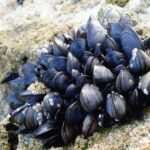
The Gulf of Maine Council's Gulfwatch regional monitoring program has released a new fact sheet that discusses its findings about contamination in coastal waters over the past decade. The publication describes the challenges and methods of Gulf-wide monitoring, a novel illustration shows why blue mussels make good sentinels, and a case study from New Hampshire explores the outcomes of an oil spill. Click here to download the fact sheet (PDF, 517 KB).

State of the Estuaries Conference in New Hampshire, Oct 20-21 (September 29, 2003)
A technical conference examining key environmental health indicators of New Hampshire’s estuarine systems is being facilitated by the New Hampshire Estuaries Project and the Great Bay National Estuarine Research Reserve. The conference will be held October 20-21, 2003, in Portsmouth, New Hampshire. Click here for more information.

New online photo gallery of Gulf habitats and creatures (September 19, 2003)
Explore the Gulf of Maine—without leaving your computer! We've added a photo gallery to the Gulf of Maine Council's Web site. The spectacular images show diverse habitats and creatures—including sharks, whales, and squid—found in the Gulf of Maine from Cape Cod to Nova Scotia.

American Rivers seeks proposals for river restoration grants (September 19, 2003)
American Rivers is seeking proposals for community-based river restoration grants as part of its partnership with the National Oceanic and Atmospheric Administration (NOAA) Community-Based Restoration Program. These grants are designed to provide support for local communities that are utilizing dam removal or fish passage to restore and protect the ecological integrity of their rivers and improve freshwater habitats important to migratory (anadromous) fish.  Grants will be limited to projects in the Northeast, Mid-Atlantic, and California. More information

USGS compiles sediment data for Gulf of Maine (September 15, 2003)
The United States Geological Survey (USGS), in cooperation with the University of Maine, University of New Hampshire, Boston University, and Bigelow Laboratory for Ocean Sciences, has compiled surficial sediment data for the seafloor along the northeastern United States. These data, which contain information on sediment grain size and lithology for over 49,000 stations, were compiled as part of the USGS's National Benthic Habitats and Marine Aggregate Resources and Processes Projects to update existing maps of surficial sediment distribution. Most of the sediment data in this report are separated into data layers by their original source project and are provided as single-point vector datasets with sample identifiers, navigation, textural attribute information, and metadata.

Request for proposals (RFP) for habitat restoration grants (August 15, 2003)
As part of a three-year program, the Gulf of Maine Council on the Marine Environment and the NOAA National Marine Fisheries Service's Community-based Restoration Program are issuing this RFP to support a strategic approach to marine, coastal and riverine habitat restoration within Maine, Massachusetts, and New Hampshire. Non-governmental organizations (e.g., community associations, cooperatives, civic groups), municipalities, schools, and tribal and state governments are invited to compete for funding made available through this grant. The Council and NMFS are interested in funding projects that will result in on-the-ground restoration of habitat to benefit living marine resources, including anadromous fish species. Proposals must be postmarked no later than November 14, 2003. Request for proposals (Word, 286 KB). List of 2002-2003 awards (Word, 31 KB).

Council's Working Group learns about horseshoe crab conservation (August 4, 2003)
Above: At a recent Gulf of Maine Council meeting in Hyannis, Massachusetts, Justin Huston of the Nova Scotia Department of Fisheries and Agriculture and Theresa Torrent-Ellis of the Maine Coastal Program examine horseshoe crabs found on Cape Cod, courtesy of Brenda Boleyn (right) of the Committee for the Conservation of Horseshoe Crabs. Boleyn was joined by John Kelsey (Friends of Pleasant Bay) and Ruth Herrold Carmichael (Boston University Marine Program), who gave a presentation on the natural history and concerns about the crab’s decline.

Nominations invited for 2003 recognition awards (July 24, 2003)
The Gulf of Maine Council invites nominations for its annual Gulf of Maine Visionary Award and Longard Volunteer Award. Nominations are due October 10, 2003. Nomination form (Word, 36 KB)

New magazine article on seafloor mapping at Jeffreys Ledge (July 24, 2003)
Gulf of Maine Council science translator Peter Taylor has written an article for Wildlife Journal magazine about scientists and fishermen collaborating to understand the ecological effects of an ocean fishery closure on Jeffreys Ledge. "Mapping the Ledge" (PDF, 306 KB)

Council announces 2003-2004 awardees of Action Plan Grants Program (July 11, 2003)
The Gulf of Maine Council on the Marine Environment is pleased to announce the awardees of the 2003-2004 Gulf of Maine Council Action Plan Grants Program.

Gulf of Maine Council unveils redesigned Web site (July 3, 2003)
The Gulf of Maine Council has redesigned its Web site to serve as an information clearinghouse on resource managment activities in the Gulf of Maine and its watershed. New features include a searchable NGO Directory with data on 600 non-government organizations in the region and a Knowledgebase that provides general and scientific information on priority issues. We encourage you to add or update your listing in the People Finder, which contains expanded search features to facilitate networking among environmental professionals. The site has been reorganized to improve navigation, the graphic design has been upgraded, and the site is compliant with standards of the Americans with Disabilities Act. The redesign project was contracted to Image Works of Portland, Maine.

Science translation report on seafloor mapping (June 16, 2003)
The Science Translation Project of the Gulf of Maine Council has released a publication about seafloor mapping in the Gulf of Maine. The four-page document provides a summary of mapping activities and technology, along with case studies illustrating applications for management. "Mapping the undersea landscape: Using seafloor maps to improve management of the Gulf of Maine" was distributed as an insert in the summer 2003 issue of The Gulf of Maine Times and can be downloaded here (PDF, 454K). Seafloor mapping is increasingly important for resource management, habitat conservation, commercial fishing, engineering of cables and pipelines, and other activities. The Gulf of Maine Mapping Initiative, an international partnership endorsed by the Gulf of Maine Council, has been formed to map the entire Gulf.

Gulf of Maine contaminated sediments database (June 9, 2003)
The Database of Contaminated Sediments for the Gulf of Maine from the US Geological Survey provides a compilation of existing, edited data on contaminated sediments and related sediment properties. The data are gathered from many sources, reviewed for quality, and integrated into a common format in order to produce a regional database. This database contains original data from heterogeneous sources and provides documentation about the quality of those data. The data are sorted, mapped, and plotted to create a synthesis that addresses a variety of research and management applications. A description of the methods utilized to create the database, the structure of the compiled database, plots and maps of the data, and discussion of its application is provided.

RARGOM launches new Web site (May 15, 2003)
The Regional Association for Research on the Gulf of Maine (RARGOM) is pleased announce its revised and expanded Web site. RARGOM is an association of institutions with active research interests in the Gulf of Maine and its watershed. The Association was founded in 1991 and is presently housed at Dartmouth College. The basic missions of the Association are to advocate and facilitate a coherent program of regional research; to promote scientific quality; and to provide a communication vehicle among scientists and the public.

Keeley receives Coastal Steward of the Year Award (March 13, 2003)
Long-time Gulf of Maine Council Working Group member David Keeley of the Maine State Planning Office has received the Coastal Steward of the Year Award from the National Oceanographic and Atmospheric Administration (NOAA). The honor is one of the annual Walter B. Jones Awards, which recognize excellence in ocean resource management programs, as well as in public and private endeavors to conserve America's coast. Read the NOAA news release


© 2008 Gulf of Maine Council on the Marine Environment - - Site developed by Yellahoose - 64.106.216.60